Rolling ASMR
- 2.4
- Rating
- 1.00M
- Installs
- Free
- Price

 Analysis by App-foxy
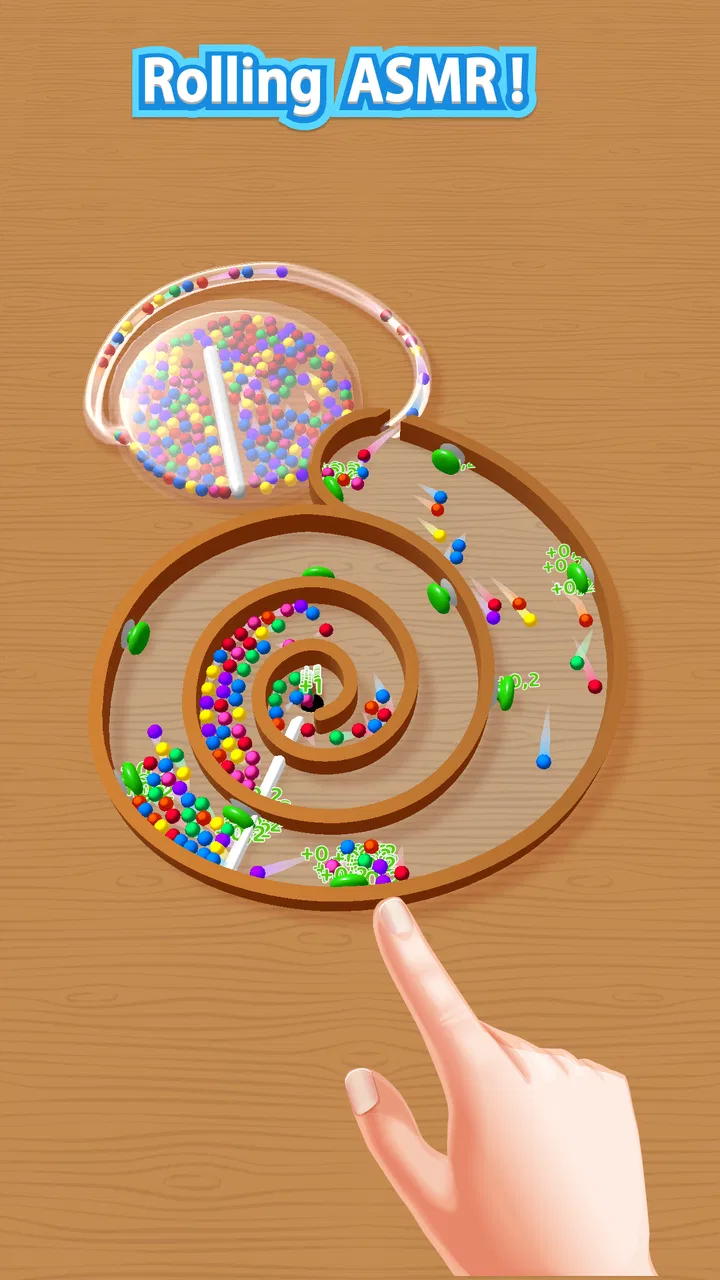
I spent time with Rolling ASMR as a quick arcade game built around a very simple idea: tap to make a rolling object move faster, then keep the action going as the playfield becomes more entertaining. It is the sort of game that asks for almost no preparation. You can open it during a short break, understand the basic interaction immediately, and decide within minutes whether the repetitive motion is relaxing or too limited for your taste.
The game comes from Lumos Games Teknoloji Yazılım Ve Pazarlama A.Ş. and is available free to start. That matters because its appeal depends heavily on whether you enjoy a compact, loop-based experience rather than a substantial arcade campaign. I found the presentation easy to approach, but the simplicity is also the central question: does the satisfying rolling feedback remain enjoyable after the first few sessions?
How the rolling gameplay feels in everyday use
The main interaction is deliberately uncomplicated. Tapping is used to increase speed, while adding more balls creates a busier and more playful scene. There is no long tutorial to study before trying it, which makes the game suitable for a quick commute, a waiting room, or a few minutes after finishing a task. I could start playing without having to remember complicated controls or plan a long session.
You May Also Like

 Blood Strike: 2.5 Anniversary
Blood Strike’s Loadouts Turn Every Drop Into a Tactical Gamble
A close look at Blood Strike’s custom loadouts: how fast access to signature weapons reshapes its battle royale rhythm, rewards preparation, and narrows the gap between fights.

 Pandora - Music & Podcasts
Pandora’s Music Is Easy to Start, but Harder to Recover
Pandora’s strength is its low-effort path from a seed to a station. Its weak spot is how much confidence it asks you to place in connection, setup, and quiet recovery.

 8 Ball Pool
 Is Built on Rivalries, Rematches, and Routine
A close look at the rivalries, rematches, shared routines, and unanswered safety questions that turn a quick pool match into a persistent mobile community.

 Samsung Music
’s Quiet Strength Is Playing What You Already Own
Its reach comes less from spectacle than from dependable access to a personal library. That simplicity is both the app’s strongest retention engine and its ceiling.

 AccuWeather: Weather Radar
AccuWeather Review: A Quick, Clear Forecast for Everyday Decisions
For everyday plans, the best forecast is the one you can understand quickly. AccuWeather makes rain timing, radar, and local conditions easy to act on, with a few trade-offs.

 Hill Climb Racing
Why Hill Climb Racing Still Turns Crashes Into One More Run
A tiny car, a bumpy hill and one more upgrade: Hill Climb Racing keeps resurfacing because its simple chaos makes every near-miss feel personal.
More From Our News Desk
View All News


That simplicity gives the game an almost tactile quality. The pleasure comes less from mastering a complex system and more from watching motion build up on screen. For some players, this kind of visual rhythm can be a useful mental reset. I would not describe it as a deep challenge in the same way as a traditional score-focused arcade game, but it can work as a small distraction when I want something lighter than a competitive title.
A useful way to approach it is to treat each session as a short sensory break rather than a serious gaming commitment. If I expect layered progression, demanding reaction tests, or a story, the experience feels thin. If I want immediate input and a rolling visual loop, the design makes more sense. That distinction is important because the game’s strongest quality is accessibility, not complexity.
What the free entry point really means
The game can be downloaded and played without an upfront purchase, so trying it does not require a paid commitment. That makes the initial decision straightforward: install it, test the rolling interaction, and see whether the sound and movement suit you. The free entry point is especially useful for casual players who do not want to buy an arcade game before knowing whether its central mechanic will hold their attention.
There are in-app purchases listed from $0.99 to $54.99 per item. I would therefore separate the value of free access from the value of optional spending. The free experience is what should determine whether you enjoy the game; purchases should not be treated as part of the guaranteed value of installing it. Since individual spending can reach a much higher level than the smallest option, I would be careful about tapping through purchase prompts casually.
For me, the sensible approach is to play without spending first. A game based on speed, added balls, and satisfying motion has to prove that its basic loop is enjoyable before any optional purchase becomes worth considering. If the free version already gives you enough short sessions, you may have no reason to pay. If you feel bored quickly, buying into the experience is unlikely to solve the underlying issue that the core loop is not a match for you.
Where the value comes from
The value here is convenience. Rolling ASMR does not demand a large time investment, and its controls are simple enough for someone who rarely plays games. I can imagine using it while waiting for an appointment or taking a short pause between errands. In that situation, the game succeeds because it removes friction: there is no need to learn a complicated interface before getting to the main action.
It also has a distinctive mood compared with many arcade alternatives. A typical arcade game may focus on avoiding obstacles, beating a timer, or chasing a high score through increasingly difficult stages. This one leans toward visual satisfaction and repeated motion. That makes it a better fit for players who enjoy watching a process develop than for players who need constant surprises or increasingly demanding reflex tests.
One practical tip is to use short, intentional sessions. The rolling loop is easier to appreciate when I approach it as a brief reset instead of leaving it open indefinitely. After the novelty fades, repeated tapping can feel more like a routine than a game. Limiting play to a few minutes helps preserve the part that initially feels relaxing.
Another useful tip is to judge the game by its feel rather than by the number of things it appears to offer. Adding more balls may make the screen livelier, but visual busyness alone does not guarantee deeper play. I found it more helpful to ask whether the motion itself remains pleasant and whether speeding things up gives me a reason to continue. That is a more honest test than assuming more objects automatically mean more value.
Its place among arcade alternatives
Compared with a conventional arcade title, this is a lower-pressure option. A reflex game can leave me frustrated after repeated failures, while a rolling-focused experience is easier to pick up when I am tired or distracted. It is also more approachable for someone who does not usually play games because the basic interaction is quickly understandable.
The trade-off is depth. Players who enjoy carefully designed levels, character abilities, competitive leaderboards, or a strong sense of progression may find more lasting value in another arcade game. Rolling ASMR is closer to a focused interactive toy than a large arcade adventure. That is not automatically a flaw, but it does mean expectations need to be realistic.
It may also appeal to people who enjoy ASMR-style visual feedback, although I would not assume that the label alone guarantees a calming experience for everyone. Some players find repeated tapping and fast movement soothing; others may find the loop monotonous. The best comparison is personal: if you prefer quiet, repetitive interaction, this could be more appealing than a noisy action game. If you want constant goals and clear victories, a score-driven alternative will probably offer better value.
Limitations that affect longer sessions
The same minimal design that makes the game easy to start can limit how long I want to keep playing. Once I understand that tapping increases speed and that more balls add activity, the basic idea is no longer mysterious. Without a strong reason to return, the experience can become repetitive. I would not install it expecting the kind of long-term variety found in a fuller arcade package.
The average rating is 2.4 from around 9.6 thousand ratings, alongside more than 600 written reviews. Those figures do not decide my opinion by themselves, but they are a useful warning to approach the game with modest expectations. The large install count, at over one million, shows that it has reached a sizable audience, yet popularity does not change the fact that the experience will depend heavily on whether its narrow loop fits your preferences.
There is also a possible value concern around optional purchases. Because the game is free to start but includes items priced across a broad range, I would avoid spending until I had played enough to understand what I actually want from it. For a lightweight arcade distraction, even a small purchase deserves thought if the free interaction already feels repetitive. I would especially recommend checking the purchase screen carefully before confirming anything.
A further limitation is that the game is not likely to satisfy every kind of break. If I need a calming activity with no pressure, the tapping may still feel active rather than restful. If I need a stimulating challenge, the simple rolling loop may feel underpowered. It sits between those uses: more interactive than watching a relaxing video, but less demanding than a traditional arcade challenge.
Who is most likely to enjoy it
I think the best audience is casual players who want an immediate game with a narrow focus. It can suit someone who likes watching objects move, enjoys repetitive interactions, or wants a title that can be understood without instructions. It is also a reasonable choice for a person who is curious about the ASMR-style angle but does not want to commit money before trying it.
Parents may appreciate the Everyone content rating as a sign that the game is positioned for a broad audience. Even so, I would still treat the in-app purchase options separately from the age rating. A child-friendly content classification does not remove the need for an adult to manage spending choices on a device.
It could also work for a friend who does not identify as a gamer. I would describe it as a small rolling interaction rather than a demanding arcade challenge. That explanation sets the right expectation and avoids presenting it as something it is not. The game’s approachable controls are a strength when the goal is to start playing quickly.
I would tell competitive arcade fans to skip it unless they specifically enjoy a more passive or repetitive style. Players searching for a campaign, complex progression, or a high level of mechanical mastery will probably get more from another title. The same applies to anyone who dislikes tapping-based loops or loses interest once the central mechanic becomes familiar.
Device compatibility and practical expectations
The game supports devices running Android 7.0 or later, and its current version is 3.0.6. That makes the minimum software requirement relatively approachable for people using older compatible Android devices. Before installing, I would still check the operating system on the phone, particularly if it is an older handset that has not received recent updates.
Because this is a compact arcade game, I would use it as an on-demand distraction rather than a title that needs careful planning around a long session. A realistic everyday scenario would be opening it while waiting for a coffee, playing for a few minutes, and closing it before the task becomes repetitive. That is where the game’s free entry and simple controls make the most sense.
I would also avoid treating the version number as a promise of a particular amount of content. A newer version can indicate ongoing maintenance, but it does not automatically mean the game offers the depth of a larger arcade release. My recommendation remains based on the interaction itself: install it if the rolling concept sounds appealing, not because you expect a broad collection of modes.
My recommendation after weighing the trade-offs
My verdict is cautiously positive for the right player. Rolling ASMR is worth trying because the free starting point makes experimentation easy, the controls are immediately approachable, and the rolling motion offers a different mood from more aggressive arcade games. I can see it working well as a tiny break-time game, especially for someone who enjoys repetitive visual feedback.
I would not recommend paying quickly, though. The listed purchase range means optional spending can become significant compared with the lightweight nature of the game. Play the free version first, decide whether the basic loop still feels pleasant after the initial novelty, and only then consider whether any purchase has a clear personal benefit.
In the end, this is a focused arcade experience rather than an all-purpose game. Its strength is that it gets out of the way and lets me tap, speed things up, and watch the rolling action develop. Its weakness is that the same narrow focus may not provide enough variety for long-term play. Choose it for quick, satisfying interaction, not for deep arcade progression.
For a friend, I would say: try it if you want a free, low-commitment rolling game and enjoy ASMR-like motion. Skip it if you need demanding challenges, substantial goals, or a clear reason to return every day. That distinction gives the game its fairest evaluation and keeps the free access in perspective.
FAQs for Rolling ASMR
01What is Rolling ASMR, and how does the app work?
Rolling ASMR is a relaxing mobile experience focused on soothing rolling movements, satisfying visuals, and calming sound effects. After opening the app, you interact with different objects or scenes by rolling, guiding, or completing simple actions. The gameplay is intentionally easy to understand, making it suitable for short relaxation sessions rather than competitive or story-driven play.
02Is Rolling ASMR free to download and play?
Rolling ASMR can generally be downloaded for free, allowing users to try its main activities without an upfront purchase. However, the app may include advertisements, optional purchases, or premium content depending on the version and platform. Before downloading, it is worth checking the store listing and in-app purchase details, especially if children will be using the device.
03Does Rolling ASMR work without an internet connection?
Some parts of Rolling ASMR may remain available offline after installation, particularly basic levels or previously loaded content. Nevertheless, an internet connection can be required for advertisements, new content, account-related features, updates, or restoring purchases. Offline availability may also differ between Android and iOS versions, so users should test the app before relying on it during travel.
04Is Rolling ASMR suitable for children?
Rolling ASMR is generally simple to operate and does not appear to depend on complex controls, which may make it appealing to younger users. Parents should still review the age rating, advertising behavior, privacy information, and optional purchases before allowing unsupervised play. If the app includes repetitive sounds or visual effects, supervision is also sensible for children who may be sensitive to stimulation.
05What should users know about the advertisements and permissions in Rolling ASMR?
Like many free casual and relaxation apps, Rolling ASMR may display advertisements or offer optional purchases. The exact frequency can vary by version, region, and whether premium options are enabled. During installation, review the permissions requested by the app and avoid granting access that seems unrelated to its features. Checking privacy settings and disabling unnecessary notifications can also improve the experience.
Pros
- Simple one-touch controls make it easy to play casually.
- Short levels fit well into quick breaks or commutes.
- Satisfying rolling sounds enhance the relaxing ASMR experience.
- Bright visuals and smooth animations make progress enjoyable.
- Works well for players seeking a low-pressure
- stress-relieving game.
Cons
- Gameplay can become repetitive after extended sessions.
- Some sound effects may feel irritating rather than relaxing.
- Progression may lack depth for players seeking a challenge.
- Ads can interrupt the experience
- depending on the version.
- Limited customization may reduce long-term replay value.

Rolling ASMR
Gallery